How Long to Grill Chicken | For Perfect Texture and Moisture — Grill and Grilling
Chicken comes in various structures: Whole, wings, thighs, bosoms, bone-in and out… How long does each cut need barbecuing for, to be alright for eating, and delicious as well? Imagine a scenario in which you barbecue for a really long time. Or on the other hand not long enough? Peruse on for the subtleties.
How long to barbecue chicken?

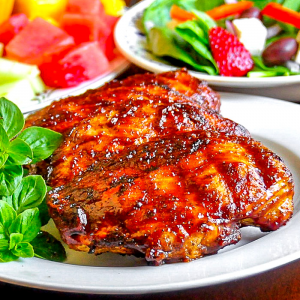
The response for the most part relies on these two things: The size of the chicken piece — including bone substance — and the temperature of the barbecue.
The more bones a piece of chicken has, the more it will take to cook. In comparison to other portions, the drumstick and thighs, for example, have the most bones and will take the longest to cook.
The other component is the temperature of your BBQ. The lower the temperature, the additional time you will require.
In this article, we will investigate the diverse chicken parts, the elements that can influence how it requires to barbecue them, and portray exhaustively the time and temp needed for barbecuing each unique cut.
Having this information will assist you with arranging your cook of the ideal bird. No more mystery, or humiliating chicken disasters.
So we should start with maybe the main thing to think about first, the temperature all around.
Outline: Average Grilling Times for every single Chicken Cut
For your reference, here are the normal occasions for barbecuing different size bits of chicken:
Chicken bosom, boneless, skinless — 6–8 ounces will take somewhere in the range of 8 and 12 minutes over direct medium hotness (350° F)
Chicken bosom, bone-in — 10–12 ounces — 30 to 40 minutes over aberrant medium hotness (350° F)
Leg or thigh, bone-in — 30 to 40 minutes over aberrant medium hotness (350° F)
4 ounces boneless, skinless thigh — 8 to 10 minutes over high heat (450–650° F)
Chicken wings — 2–3 ounces — 18 to 20 minutes over direct medium hotness (350° F)
Entire chicken — 3 1/2 to 4 1/2 lbs — 1 1/2 to 2 hours over circuitous medium hotness (350° F)
Do remember that these occasions might fluctuate assuming you marinade your chicken, or add a sauce, or change the chicken in any capacity. Cooking Temperatures, Thermometers and Food Safety With regards to really taking a look at the temperature of cooked chicken (or any meat) nothing can supplant a quality advanced, moment read thermometer. They are profoundly exact, quick and solid.
I will address different techniques to check for doneness in the event that you don’t have one, yet nothing is better or more secure. I STRONGLY suggest you have a moment perused computerized thermometer before you cook your first piece of chicken! Assuming you don’t have one, look at our manual for the best moment read thermometers.
Since you have a thermometer close by, you really want to know the temperature of an appropriately cooked piece of chicken.
What is The Best Internal Temperature For Chicken?

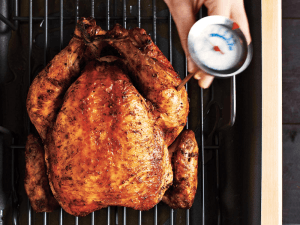
On the off chance that you just recollect one temperature, it’s 165 degrees F (75 °C). This is the base safe inside temperature of chicken.
While you need to cook your legs and thighs somewhat higher, you will realize that they’re protected to eat. A few plans will advise you to cut the meat, and assuming the juices run clear, the chicken is cooked. Clear squeezes are not a solid sign of doneness. Contingent upon the age of the bird, juices probably won’t run clear until it’s way overcooked.
What Happens if The Chicken Cooks Too Long?

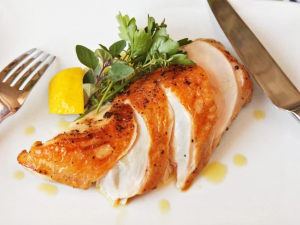
Chicken is an exceptionally lean meat and dries rapidly. Overcooking will make it dry, chewy and intense. Also the skin-on chicken over direct hotness will consume. Overcooking can without much of a stretch outcome in a harsh consumed flavor all through the meat rather than a gentle, heavenly smoky flavor.
For Complete blog, Please visit our website. Grill and Grilling


Comments
Post a Comment